 By Zack Devin
Espalier is a time-honoured technique that combines horticultural skill with aesthetic appeal, training fruit trees to grow flat against a structure, such as a wall or trellis, in decorative patterns. This method maximises space, enhances fruit production, and transforms gardens into living art. For British gardeners, particularly those with limited space or modest budgets, espalier offers a practical solution to cultivate fruit trees without requiring expansive plots. This article presents six cost-effective trellising ideas tailored for espalier, enabling gardeners to create stunning displays while keeping expenses low. Each idea prioritises affordability, using readily available materials and straightforward construction methods suitable for both novice and experienced gardeners.
A nursery specialist from CRJ FruitTrees advises that espalier is an excellent choice for small gardens, as it allows gardeners to buy fruit trees suited to compact spaces. The specialist recommends selecting dwarf or semi-dwarf varieties, such as apple or pear trees, which adapt well to training and require minimal maintenance. This approach ensures high yields and visual appeal without the need for costly infrastructure.
Espalier and Its Benefits
Espalier involves training fruit trees, typically apples, pears, or stone fruits, to grow in a two-dimensional plane, often against a wall, fence, or freestanding trellis. The technique originated in ancient Egypt and was refined in medieval Europe, where it was used to grow fruit in confined monastery gardens. Today, it remains popular for its ability to save space, improve air circulation, and increase sunlight exposure, leading to healthier trees and better fruit quality. For British gardeners, espalier is particularly valuable in urban settings or small backyards, where space is at a premium. Additionally, espaliered trees can serve as natural dividers or decorative focal points, enhancing garden aesthetics without requiring expensive landscaping.
The key to successful espalier lies in choosing an appropriate trellis system that supports the tree’s growth while complementing the garden’s design. The following sections outline six budget-friendly trellising ideas, each designed to be accessible, durable, and effective for training fruit trees.
1. Wire and Screw-Eye Trellis
One of the simplest and most cost-effective trellising systems for espalier involves using galvanised wire and screw-eye hooks. This method requires minimal materials, making it ideal for gardeners looking to buy fruit trees and create a trellis without significant investment. To construct this trellis, two sturdy wooden or metal posts are driven into the ground at either end of the desired row, typically 3 to 5 metres apart, depending on the number of trees. Screw-eye hooks are then inserted into the posts at intervals of approximately 60 centimetres vertically, starting about 30 centimetres from the ground. Galvanised wire, which resists rust and withstands British weather, is threaded through the hooks to create horizontal supports.
The wire should be taut to support the weight of growing branches, and gardeners can use soft cloth ties to secure branches to the wire, ensuring flexibility as the tree grows. This design is versatile, accommodating patterns such as horizontal cordon or fan espalier, and can be adapted to suit various fruit tree varieties. The total cost, including posts, wire, and hooks, is typically under £30, making it an economical choice. Maintenance is minimal, though gardeners should periodically check the wire tension and replace any corroded components to ensure longevity.
2. Upcycled Wooden Ladder Trellis
Repurposing an old wooden ladder offers a rustic, budget-friendly trellis option that adds charm to any garden. Many British households have access to discarded ladders, which can often be sourced for free from local community groups or second-hand marketplaces. To create this trellis, select a ladder that is sturdy but no longer safe for climbing, as the rungs will serve as supports for the tree’s branches. The ladder is secured by anchoring its feet into the ground, either by digging small holes or using metal stakes to prevent tipping, especially during windy conditions common in the UK.
Once in place, the ladder’s rungs act as natural supports for training branches in a fan or informal espalier pattern. Gardeners can tie branches to the rungs using biodegradable twine, allowing the tree to grow in a structured yet organic shape. This method is particularly effective for apple trees, which are readily available for those looking to buy fruit trees suited for espalier. The ladder trellis requires no additional materials beyond the ladder itself and basic securing tools, keeping costs negligible. However, gardeners should inspect the wood annually for rot, particularly in damp climates, and consider treating it with a natural sealant to extend its lifespan.
3. Bamboo Pole Framework
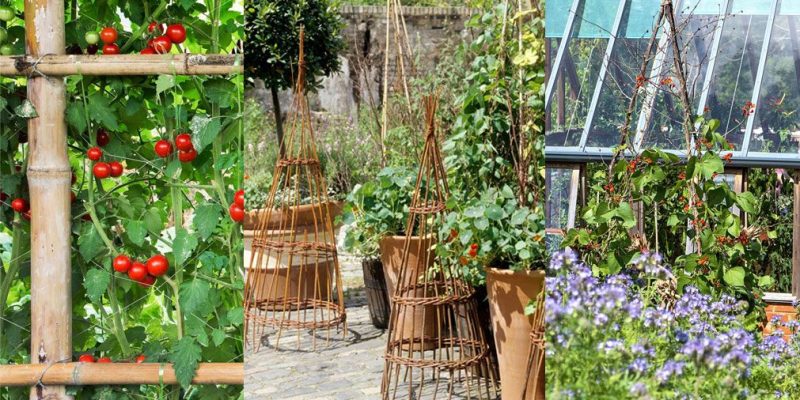
Bamboo poles are an affordable and sustainable material for constructing an espalier trellis, widely available at garden centres or online for as little as £10 for a bundle. Their uniform shape and natural strength make them ideal for creating a lightweight yet robust framework. To build a bamboo trellis, gardeners can arrange poles in a grid or fan pattern, securing them with twine or zip ties at the intersections. For a freestanding trellis, four to six poles are driven into the ground to form a rectangular or teepee-like structure, with horizontal cross-pieces added to support the tree’s branches.
This method is particularly suited for informal espalier styles, where branches are allowed to grow with less rigid shaping. Bamboo’s natural texture provides grip for climbing tendrils, making it suitable for both fruit trees and ornamental vines. For those planning to buy fruit trees, pear and plum varieties thrive on bamboo trellises due to their flexible branches. The primary advantage of this system is its low cost and ease of assembly, though gardeners should replace poles every few years, as bamboo can degrade in wet conditions. Drying the poles thoroughly before use can help prevent premature rotting.
4. Pallet-Based Trellis
Wooden pallets, often available for free from local businesses or recycling centres, offer a versatile and budget-conscious option for espalier trellising. A single pallet can be transformed into a trellis by securing it vertically to two posts driven into the ground or attaching it directly to a fence or wall. The pallet’s slats provide natural attachment points for training branches, and gardeners can enhance stability by adding a second pallet to form a triangular structure, which is particularly effective for heavier fruit trees.
To ensure safety, only heat-treated pallets (marked with an “HT” stamp) should be used, as chemically treated pallets may contaminate edible plants. This trellis style suits horizontal or fan espalier patterns and can be customised by painting or staining the wood to match the garden’s aesthetic. The cost is minimal, often limited to screws or stakes for securing the pallet, making it an excellent choice for gardeners looking to buy fruit trees without incurring additional expenses. Regular inspection for wood degradation is necessary, particularly in Britain’s humid climate, but a well-maintained pallet trellis can last several seasons.
5. Hog Panel Arch Trellis
Hog or cattle panels, available at agricultural suppliers for around £50, provide a durable and low-maintenance trellising option for espalier. These metal grids, typically made of galvanised steel, are designed to withstand heavy loads, making them ideal for supporting vigorous fruit trees. To create an arch trellis, a single panel is bent into a semi-circle and anchored between two raised garden beds or secured with T-posts. The grid pattern allows branches to be tied in various espalier styles, such as cordon or Belgian fence, offering flexibility for creative gardeners.
This method is particularly effective for small orchards or multiple trees, as a single panel can support several plants. The arch design also adds vertical interest to the garden, creating a tunnel-like feature that enhances visual appeal. For those looking to buy fruit trees, apple varieties like Cox’s Orange Pippin or dwarf pears are well-suited to this structure. While the initial cost is higher than other options, the panel’s durability ensures it remains a cost-effective choice over time, requiring little maintenance beyond occasional rust checks.
6. Recycled Window Frame Trellis
Old window frames, often found at reclamation yards or through community exchanges, can be repurposed into a charming and budget-friendly espalier trellis. By attaching chicken wire or netting to the frame, gardeners create a lightweight support system for training fruit tree branches. The frame is mounted on posts or directly onto a wall, with the wire providing a grid for securing branches in patterns like fan or formal espalier. This method is particularly appealing for gardeners aiming to blend functionality with vintage aesthetics, as the frame adds a decorative element to the garden.
The cost of this trellis is minimal, typically under £20 for the wire and mounting materials, assuming the frame is sourced for free or at a low price. Apple and pear trees, popular choices for those looking to buy fruit trees, thrive on this system due to their adaptability to structured training. Gardeners should ensure the frame is securely fastened to withstand wind and check the wire for wear, replacing it as needed to maintain support. This trellis is an excellent option for small spaces, as it maximises vertical growth while keeping expenses low.
Practical Considerations for Espalier Trellising
When selecting a trellising system, gardeners must consider several factors to ensure success. The choice of fruit tree is critical, as different varieties have unique growth habits. Apple and pear trees are ideal for espalier due to their flexible branches and compact growth, particularly dwarf or semi-dwarf varieties. Gardeners planning to buy fruit trees should consult with suppliers to select cultivars suited to their climate and soil conditions, such as those adapted to the UK’s temperate weather.
The location of the trellis is equally important. Fruit trees require at least six hours of direct sunlight daily, so the trellis should be positioned in a sunny, south-facing spot if possible. Wind protection is also crucial, as strong gusts can damage trained branches. A sheltered location or a windbreak can mitigate this risk. Finally, regular maintenance, including pruning and tying branches, is essential to maintain the desired espalier shape and ensure healthy fruit production. Pruning should be done in late winter or early spring, with ties adjusted as the tree grows to prevent damage.
Enhancing Garden Aesthetics with Espalier
Beyond their practical benefits, espalier trellises add significant visual appeal to gardens. The structured patterns create a sense of order, making them ideal for formal gardens, while informal styles suit cottage or naturalistic designs. Combining different trellis materials, such as wood and wire, can add texture and interest, transforming a simple backyard into a dynamic landscape. For urban gardeners, espaliered trees can disguise unsightly walls or fences, turning a functional necessity into a decorative feature.
The versatility of espalier also allows for creative experimentation. Gardeners can mix patterns, such as combining fan and cordon styles, or incorporate ornamental plants alongside fruit trees to enhance biodiversity. For example, climbing roses or clematis can complement apple trees, creating a multi-seasonal display. This approach not only maximises space but also elevates the garden’s aesthetic, making it a focal point for visitors and residents alike.
Cost-Saving Tips for Espalier Projects
To keep espalier projects budget-friendly, gardeners should prioritise locally sourced or recycled materials. Community groups, online marketplaces, or local businesses often offer free or low-cost items like pallets, window frames, or bamboo. Borrowing tools, such as drills or wire cutters, from neighbours can further reduce costs. Additionally, starting with a single tree allows gardeners to test a trellis design before scaling up, minimising financial risk.
For those looking to buy fruit trees, investing in young saplings rather than mature trees can save money, as they are easier to train and less expensive. Regular maintenance, such as checking for pests or diseases, prevents costly replacements, ensuring the trellis and tree remain functional for years. By planning carefully and leveraging affordable materials, gardeners can create stunning espalier displays without straining their budgets.
Conclusion
Espalier trellising offers British gardeners a practical and visually appealing way to cultivate fruit trees in limited spaces. The six ideas presented—wire and screw-eye, upcycled ladder, bamboo pole, pallet-based, hog panel arch, and recycled window frame—provide affordable options that cater to various skill levels and garden styles. Each method balances cost, durability, and functionality, enabling gardeners to create productive and beautiful espalier displays. By selecting appropriate trees, positioning trellises thoughtfully, and maintaining them diligently, gardeners can enjoy the benefits of espalier for years to come, transforming their outdoor spaces into thriving, budget-friendly orchards.